Why am I getting a high percentage of stale shares?
A stale share occurs when your miner submits a share to the mining pool after the pool has already moved on to the next block.
What Causes a Stale Share?
Since a new block is mined about every 10 minutes, sometimes your miner will still be submitting shares to a block that has already been found while the mining pool has moved on to the next block. As a result, a small percentage of stale shares is expected during regular operation, with an average stale rate of .5% or lower, depending on your miners.
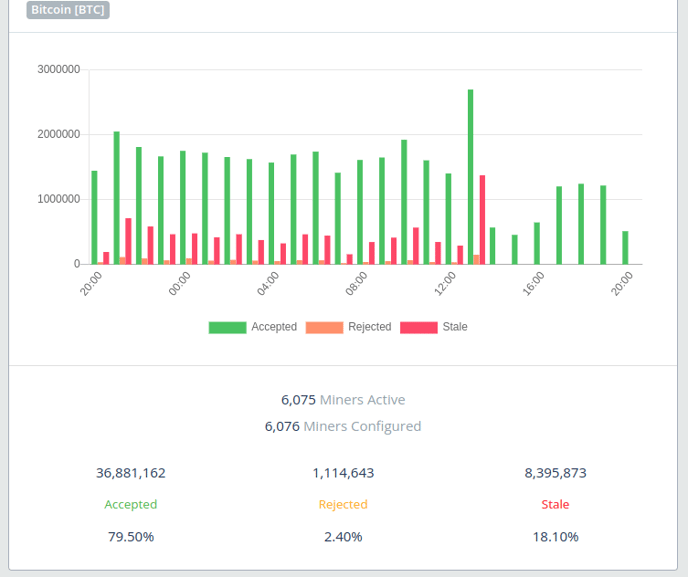 If you see a spike in stale shares, it could be due to network latency or an issue affecting your connectivity to the mining pool. The slower your network is, the longer it takes for your miners to receive notification about a new block.
One thing to remember: Some mining pools will merge stale and rejected shares into one rejected share count without differentiating between the two. Foreman shows shares reported by the mining pool, which can cause only rejected shares to be shown, depending on the pool you are using.
How Foreman Tracks Reboots and Uptime
When a miner is mining consecutively, the number of shares it reports that it's submitted increases. There are two main cases where this counter resets: the miner was rebooted, or the pools were changed. Our logic for identifying a reboot is based on that counter resetting, so we will almost always flag a miner as rebooted when the pools are changed as well. This same logic is used to calculate uptime. When we identify a reboot or pool reset, we mark the time that it happened, and the uptime displayed is simply the amount of time that has elapsed since then.
Reducing Network Latency
Should you determine that high network latency is causing your operation to experience an abnormally high percentage of stale shares, there are a couple of things you can check. The first thing you can check is the speed of your internet connection. Upgrading to the best available package from your provider, preferably fiber optic, will ensure your miners are submitting their shares to the mining pool as soon as possible. Another thing you can try is reducing the amount of non-mining-related activity occurring on your network. Removing non-essential activity allows your miners to take advantage of the full capacity of your network.
If you need assistance with a network audit to determine the cause of your spike in stale shares, submit a ticket below.
Comments
0 comments
Article is closed for comments.